


Why Forcing Socialisation Can Backfire: Your Dog Doesn't Have to Be Everyone's Friend | ISSUE 2
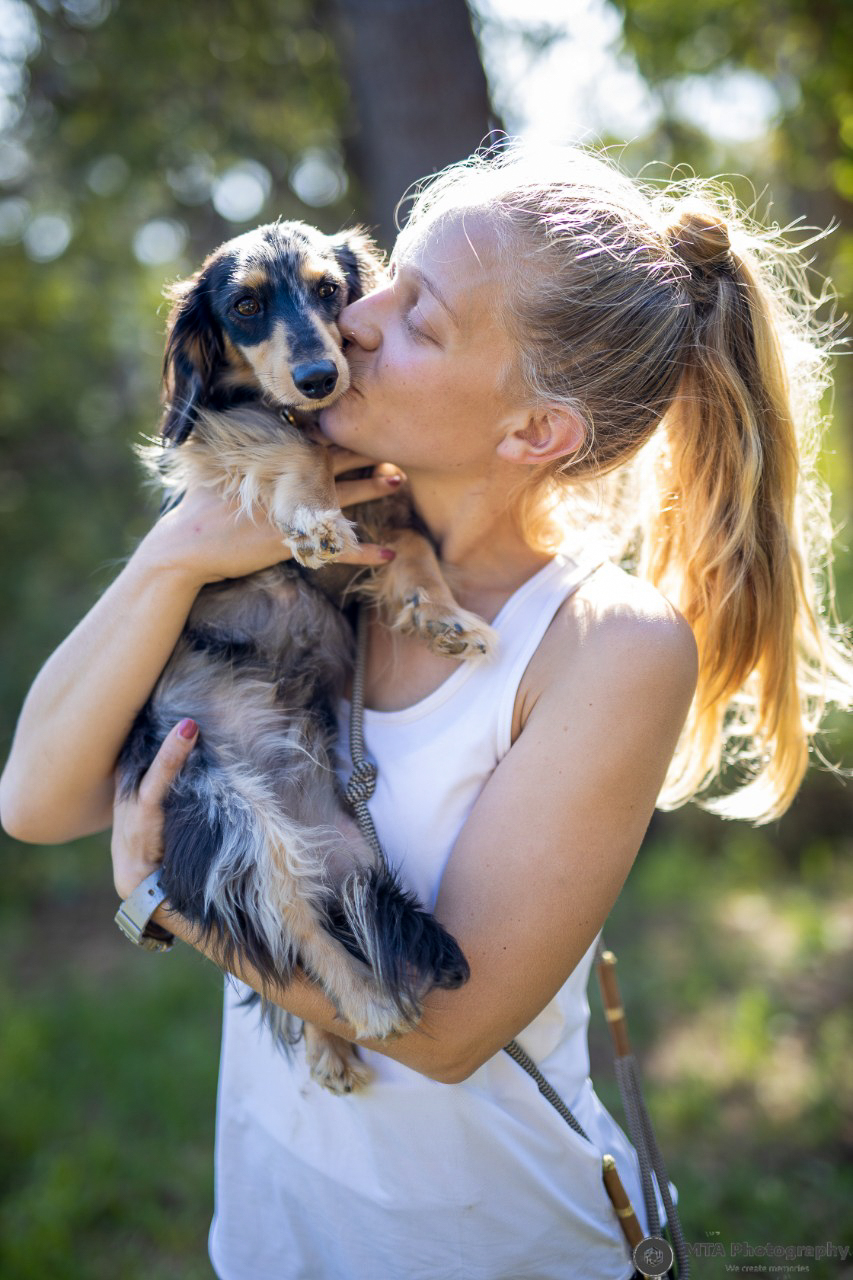

Understanding the Dog Behind the Behaviour – Issue 02
If you missed Issue 01: Understanding the Dog Behind the Behaviour: Fear, Anxiety and Reactivity, we explored why dogs may respond the way they do and how recognising the emotions behind their behaviour can help us support them with greater understanding. Read the first article before continuing with Issue 02.
Socialisation isn't about making your dog love everyone. It's about helping them feel comfortable navigating the world.
Picture this: You're out walking your dog when another owner approaches with their friendly, tail-wagging pup.
"Don't worry, he's friendly!"
Before you know it, the dogs are face-to-face, leads are tangled, and your dog is desperately trying to move away, barking or hiding behind your legs.
Sound familiar?
It's a situation many dog owners have experienced, and one that often comes with well-meaning advice.
"Let them say hello!"
"They just need to socialise more."
"Take them to the dog park. They'll get used to it."
But here's something worth considering:
Does your dog actually want to say hello?
At What a Treat Professional Pet Care, we believe that socialisation should never come at the expense of a dog's emotional wellbeing.
Not every dog enjoys unfamiliar dogs, busy environments or constant social interaction. And that's perfectly okay.
In the second instalment of our educational series, Understanding the Dog Behind the Behaviour, we're exploring what socialisation really means, why forced interactions can sometimes make things worse and how we can help our dogs navigate social situations with greater confidence.
1. What does socialisation actually mean?
One of the biggest misconceptions about dog socialisation is that it means getting your dog to meet as many people and dogs as possible.
In reality, socialisation is about helping dogs develop the ability to navigate different environments, experiences, people, animals, sounds and situations in a way that is comfortable and appropriate for them.
It's about building positive associations and helping dogs learn that the world around them is generally safe and predictable.
A well-socialised dog doesn't necessarily need to play with every dog they meet. They don't need to greet every stranger, enjoy every environment or be comfortable with every experience.
A dog who can calmly walk past another dog without feeling the need to interact is demonstrating a valuable social skill.
Similarly, a dog who can comfortably observe children playing, hear traffic passing or encounter unfamiliar people without becoming overwhelmed is benefiting from positive learning experiences.
Socialisation isn't measured by how many friends your dog has. It's about how comfortably they can navigate the world around them.
2. Why more exposure doesn't always mean more confidence
You've probably heard the phrase:
"They just need more exposure."
While gradual exposure can be an important part of helping dogs develop confidence, the way we approach it matters enormously.
Imagine being afraid of heights and having someone repeatedly take you to the edge of a tall building, insisting that you'll eventually get used to it.
Would that necessarily make you more confident?
Probably not.
For some dogs, repeatedly being placed in situations that frighten or overwhelm them can strengthen negative associations rather than help them become more comfortable.
For example, a dog who is uncomfortable around unfamiliar dogs might be taken to a busy dog park in the hope that repeated exposure will resolve their discomfort.
Instead, they may find themselves surrounded by unfamiliar dogs, unable to create distance, with very little opportunity to take a break.
They might bark, growl, hide, freeze or attempt to escape.
If these experiences happen repeatedly, the dog may become increasingly worried about encountering other dogs in the future.
This is why we need to distinguish between positive exposure and overwhelming exposure.
The aim isn't to expose dogs to as much as possible. It's to create opportunities for them to experience situations at a level they can comfortably manage.
3. Understanding your dog's social preferences
Just like people, dogs have individual personalities and social preferences.
Some dogs genuinely enjoy meeting unfamiliar dogs, playing with their canine friends and exploring busy environments.
Others prefer familiar companions, quieter walks and plenty of personal space.
Some dogs are perfectly happy sharing an environment with another dog, provided they aren't expected to interact directly.
And some dogs would much rather spend their afternoon sniffing in the garden than attending a social gathering.
None of these preferences makes a dog better or worse behaved.
It's important that we don't assume every dog should enjoy the same experiences simply because they're dogs.
We also need to remember that social preferences can change depending on age, health, past experiences, environment and emotional state.
A dog who happily played with other dogs as a puppy may become more selective as they mature. Another dog may be comfortable with familiar dogs but uncomfortable with unfamiliar introductions.
Our responsibility is to recognise the individual in front of us rather than trying to fit every dog into the same social mould.
4. What is your dog trying to communicate?
Before an interaction escalates, dogs often communicate that they're uncomfortable through subtle changes in their body language.
Learning to recognise these signals is one of the most important skills we can develop as dog owners.
Some signs that a dog may be uncomfortable during a social interaction include:
Turning their head away or avoiding eye contact.
Repeatedly licking their lips.
Yawning when they aren't tired.
Moving away or attempting to create distance.
Tucking their tail or lowering their body.
Holding their ears back.
Becoming unusually still or freezing.
Hiding behind their owner.
Repeatedly trying to disengage from another dog.
Growling, barking or snapping when earlier signals haven't resulted in more space.
As always, these behaviours need to be considered in context. One signal alone doesn't tell us everything about how a dog is feeling.
For example, a dog turning away might simply be responding to something in the environment. But if they're repeatedly moving away from another dog, avoiding interaction and showing other signs of discomfort, it's worth respecting that communication.
One of the kindest things we can do for our dogs is listen when they're telling us they need space.
5. The difference between socialisation and forced interaction
Let's look at a common scenario.
You're walking your dog when another dog approaches. Both dogs are on leads, and the other owner encourages them to say hello.
Your dog begins pulling away, turning their head and avoiding the interaction.
What should you do?
Rather than encouraging the dogs to meet, consider creating some distance and allowing your dog to observe from a comfortable position.
There is absolutely nothing wrong with choosing not to introduce your dog to another dog.
In fact, calmly walking past another dog without an interaction can be a wonderful learning opportunity.
It teaches your dog that seeing another dog doesn't automatically mean they need to approach, play or engage.
They can simply notice the other dog and continue with their walk.
This is particularly important for fearful and reactive dogs, who may find direct approaches and close interactions difficult.
We should also avoid punishing dogs for growling or communicating discomfort. These signals provide valuable information about how a dog is feeling.
Instead, we need to address the situation that is causing the discomfort and give the dog an appropriate opportunity to move away.
6. What about puppy socialisation?
This is particularly important for owners of young puppies.
Puppies have an important developmental period during which positive experiences can help shape how they respond to the world around them.
However, this doesn't mean they should be introduced to every dog, person or environment they encounter.
Quality matters far more than quantity.
A positive socialisation experience might involve:
Watching people walking past from a comfortable distance.
Hearing everyday household noises.
Exploring different surfaces.
Meeting calm, appropriate and well-managed dogs.
Experiencing gentle handling and grooming.
Travelling in the car.
Visiting new environments at a manageable pace.
Learning to settle and observe rather than constantly interact.
For puppies, it's particularly important to balance appropriate social experiences with rest and recovery.
Don't wait until all vaccinations are complete before discussing socialisation with your veterinarian. There are ways to provide appropriate early experiences while managing infectious disease risks.
A good puppy socialisation programme should be carefully planned, positive and age-appropriate.
Remember, we aren't trying to raise a puppy who loves absolutely everything. We're helping them develop the skills and confidence to navigate everyday life.
7. So, how should we introduce dogs to one another?
There isn't one introduction method that works for every dog, but there are some principles that can help make interactions more comfortable.
Start with distance.
Allow dogs to notice one another without immediately bringing them face-to-face. Observe their body language and give them room to move away.
Consider parallel walking.
Parallel walks can be a useful way for compatible dogs to become familiar with one another without the pressure of direct interaction.
Rather than walking directly towards each other, dogs move in the same direction, initially at a comfortable distance.
Over time, and only if both dogs remain comfortable, the distance may gradually decrease.
Keep interactions short and positive.
If dogs choose to engage, allow brief, appropriate interactions with opportunities to disengage. Avoid holding them in place or forcing prolonged greetings.
Give dogs an exit.
Never assume a dog wants to continue interacting simply because they initially approached.
If one dog moves away, allow them to do so.
Choose appropriate companions.
Not every dog is a suitable playmate for every other dog. Size, age, play style, energy levels and individual preferences all matter.
And remember, some dogs are perfectly happy coexisting without playing together at all.
8. Why this matters when choosing a professional dog walker
This is something particularly close to our hearts at What a Treat.
When choosing a dog walker, it's worth looking beyond how many dogs they can take out at once.
Ask yourself:
Are the dogs grouped according to their individual temperaments and needs?
Does the walker understand canine body language?
Can they recognise when a dog is becoming uncomfortable?
Are introductions managed carefully?
Are dogs given opportunities to disengage?
Is there a plan for managing unexpected encounters?
A busy group walk isn't automatically a better walk.
For some dogs, a small, carefully selected group is a wonderful way to enjoy companionship and exercise. For others, individual walks or one-on-one enrichment sessions are a much better fit.
At What a Treat, we believe that dog walking should be about more than simply getting dogs from A to B.
It's about providing appropriate exercise, enrichment, exploration and opportunities to engage with their environment in ways that suit them.
We favour smaller, thoughtfully managed walking groups rather than a one-size-fits-all approach.
For dogs who need a little extra space, we can explore individualised walking and enrichment options.
We take the time to understand the dogs in our care, their personalities and their individual needs. Not every dog will be suited to every walking group, and that's something we take seriously.
9. How can training help with socialisation?
Training can play a valuable role in helping dogs develop the practical skills they need to navigate everyday situations.
However, training shouldn't be about forcing dogs to tolerate things that make them uncomfortable.
Instead, we want to build useful skills, create positive associations and help dogs feel more confident in situations they may encounter.
Depending on the individual dog, training may include:
Responding to their name and familiar cues.
Walking comfortably on a lead.
Learning to disengage from distractions.
Practising calm observation around other dogs.
Building confidence in unfamiliar environments.
Learning to settle and relax.
Developing positive associations with new experiences.
It's important to work at a pace that suits the dog. A dog who is already overwhelmed may struggle to learn new skills in that moment.
At What a Treat Professional Pet Care, we believe that understanding why a dog behaves a certain way is an important starting point for choosing appropriate training approaches.
Our dog-training offering provides owners with an opportunity to work on practical skills and support their dogs' individual development.
Andrea Kadiu brings training qualifications through the Scuola di Interazione Uomo-Animale (SIUA), Italy, including the Educatore Cinofilo and Istruttore Cinofilo training pathways.
Together with our wider commitment to thoughtful, individualised pet care, this allows us to place greater emphasis on understanding each dog and selecting appropriate training experiences.
10. A little reminder from us: Your dog doesn't need to be everyone's friend
We'd love owners to take away one important message from this article.
Your dog doesn't have to greet every dog they encounter.
They don't have to play at the dog park, enjoy busy social environments or become friends with every dog in the neighbourhood.
They are allowed to have preferences, boundaries and personal space.
And as their owners, caregivers, pet sitters and dog walkers, it's our responsibility to respect those boundaries.
Sometimes, the best social experience is simply walking past another dog, having a little sniff and continuing on your way.
Sometimes, it's choosing a quieter route.
And sometimes, it's deciding that today isn't the day for a group walk.
That's not a failure of socialisation. It's understanding the individual dog in front of us.
Looking for professional dog walking or training in Cape Town?
At What a Treat Professional Pet Care, we believe that every dog deserves care that considers their individual personality, experiences and emotional wellbeing.
Our services are designed around the individual needs of the animals entrusted to us.
Professional Dog Walking
Our dog-walking services include thoughtfully managed small-group walks and individual walking options, depending on your dog's needs and suitability.
Dog Training
We offer training support to help owners work on practical everyday skills, positive learning experiences and their dogs' individual development.
Pet Sitting
Our professional pet-sitting services provide personalised care for your pets in the comfort of their own home.
Pet Enrichment
We believe enrichment should go beyond simply keeping dogs busy. Individual activities and appropriate exploration can provide valuable opportunities for mental stimulation and natural behaviours.
Whether you're looking for experienced dog walkers, professional pet sitting or dog-training support in Cape Town, our team takes the time to understand the animals entrusted to us.
Visit www.whatatreatpets.com to explore our services or submit a booking enquiry.
Changing the question changes the approach
Instead of asking:
How do I get my dog to socialise with other dogs?
Let's start asking:
What kind of social experiences does my dog actually enjoy, and how can I help them feel comfortable?
Because socialisation isn't about creating a dog who loves everyone.
It's about helping our dogs feel safe, confident and comfortable enough to navigate the world around them.
Less judgement. More understanding. Better care.
This article is intended for general educational purposes and is not a substitute for individual veterinary or behavioural advice. Socialisation needs vary between dogs. Persistent fear, reactivity or aggression should be assessed with appropriate professional support.
What a Treat Professional Pet Care
Cape Town | Pet Sitting | Dog Walking | Training | Enrichment | Weddings
Frequently Asked Questions About Dog Socialisation
Does my dog need to play with other dogs to be well socialised?
No. A well-socialised dog doesn't necessarily need to play with or greet unfamiliar dogs.
Being able to calmly observe other dogs, walk past them and navigate shared environments comfortably are also valuable social skills.
Can forcing my dog to socialise make them reactive?
Repeatedly placing a fearful or uncomfortable dog in overwhelming situations can strengthen negative associations and potentially increase their stress responses. Social experiences should be gradual, appropriate and tailored to the individual dog.
How do I socialise a fearful or reactive dog?
Start by understanding your dog's triggers and working at a distance where they can remain comfortable. Reward calm observation, allow opportunities to disengage and consider professional training or behavioural guidance where needed.
Are dog parks good for socialisation?
Dog parks aren't suitable for every dog. While some dogs enjoy them, others find busy, unpredictable environments overwhelming. Consider your dog's individual temperament, play preferences and ability to cope with the environment.
Is group dog walking suitable for reactive dogs?
It depends on the individual dog, their behavioural history and the composition of the group. Some dogs benefit from carefully selected companions, while others are more comfortable with individual walks. A knowledgeable dog walker should assess suitability rather than assume every dog enjoys group walks.
Should I let my puppy meet every dog?
No. Puppy socialisation should focus on positive, age-appropriate experiences rather than unrestricted interactions. Carefully managed introductions, observing other dogs from a distance and exploring different environments can all contribute to healthy development.
Can dog training help with socialisation?
Training can help dogs develop practical skills, build positive associations and become more comfortable navigating everyday situations. The approach should be tailored to the individual dog, with an emphasis on positive experiences rather than forced interactions.


Comments